News
Beyond Breathing: Advanced Meditation for Stress and Anxiety
By Teemu Arina ·
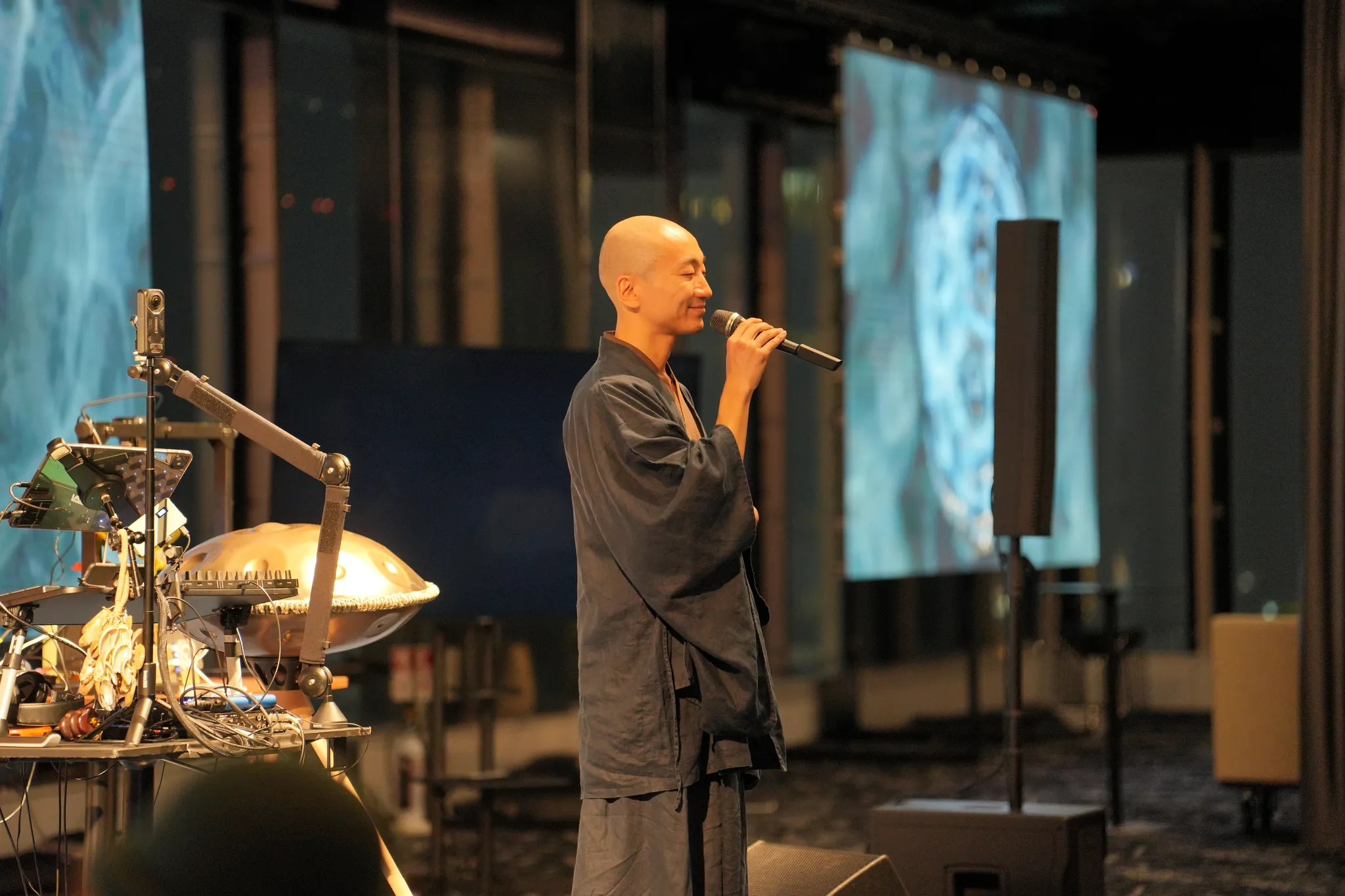
Meditation for stress and anxiety can involve more than focusing on the breath: it can train compassion, help people notice reactions and offer an immersive setting for practice. Guided meditation for stress and anxiety is most useful when it feels accessible enough to repeat and flexible enough to carry into everyday life.
At Biohacker Summit Helsinki in 2017, Stockholm in 2018 and Amsterdam in 2022, speakers described complementary approaches: wishing wellbeing for oneself and others, noticing the ego without judgement, and using virtual reality (VR) to make meditation feel more immediate. The talks did not establish that one approach works best for everyone. Each offers a way to practise attention, especially if sitting quietly with closed eyes feels difficult.
Meditation for stress and anxiety: the limitations of basic relaxation techniques
Breathing exercises offer a simple point for attention to return to, but relaxation is only one part of meditation. A person may feel calmer briefly without learning how to respond differently when difficult emotions, thoughts or interactions return.
A systematic review of 47 trials involving 3,515 adults found moderate evidence that mindfulness meditation programmes improved anxiety. The authors assessed other stress-related outcomes, too, but effects were not uniform. The findings support meditation as one possible approach, though they do not show that every practice will work for everyone (systematic review and meta-analysis of meditation programmes).
The different approaches may suit different needs. Inka Immonen, at Biohacker Summit Helsinki 2017, presented meditation as a way to condition the mind, focusing on goodwill rather than simply quieting it. At Biohacker Summit Amsterdam 2022, Zen monk Yogetsu Akasaka described how ordinary tasks can reveal judgement and resistance. At Biohacker Summit Stockholm 2018, Tristan Gribbin presented VR as an immersive option for people who struggle to sit still. His account describes access and experience; it does not show that VR is more effective than other forms of meditation.
A breathing practice can still be a good starting point; see this guide to deep breathing for stress. Practice may help someone meet a difficult moment with more kindness, awareness or choice.
Building psychological resilience through loving-kindness
Loving-kindness meditation, or metta, cultivates goodwill towards oneself and others. In her Biohacker Summit Helsinki 2017 practice, Immonen guided attention from oneself to friends, strangers and all living beings. Participants silently repeated four wishes: to be safe, happy, healthy and able to live with ease.
Loving-kindness meditation is a self-practice of goodwill. Even though we think about other people and wish them happiness, we are ultimately training our own minds.
— Inka Immonen, Biohacker Summit 2017
The practice does not require pretending every situation is pleasant or every relationship easy. Immonen described love as unconditional, inclusive compassion rather than romantic attachment, and suggested treating a wandering mind as part of the exercise: notice the distraction and gently return to the wishes.
One trial indicates how a short guided practice can fit a routine, though it did not test loving-kindness specifically. Non-experienced meditators who completed 13 minutes of guided meditation daily for eight weeks had lower negative mood and state anxiety during a stress test, and improved on several attention and memory measures compared with a podcast-listening control group. No significant effects appeared at four weeks (trial of brief daily guided meditation).
The findings do not prove that kind wishes produce the same results, but suggest a modest, regular guided practice is a realistic format to try. Metta may help build resilience by rehearsing an attitude for everyday interactions. Immonen encouraged carrying goodwill beyond the cushion, such as noticing whether a response after a difficult moment involved less self-criticism. Practitioners can acknowledge harm and still choose a more deliberate response than irritation or fear might dictate.
Using Zen practice to manage the ego and stress

A broom, bucket and cloth sit beside a floor partly swept clean.
At Biohacker Summit Amsterdam 2022, Akasaka encouraged people to notice the ego, the part of the mind that wants, resists and judges, and acknowledge its reactions without judgement.
He used cleaning as an example. A routine chore can prompt irritation or the sense that the task is beneath one's attention. The work is practical, and noticing these reactions also becomes part of the practice.
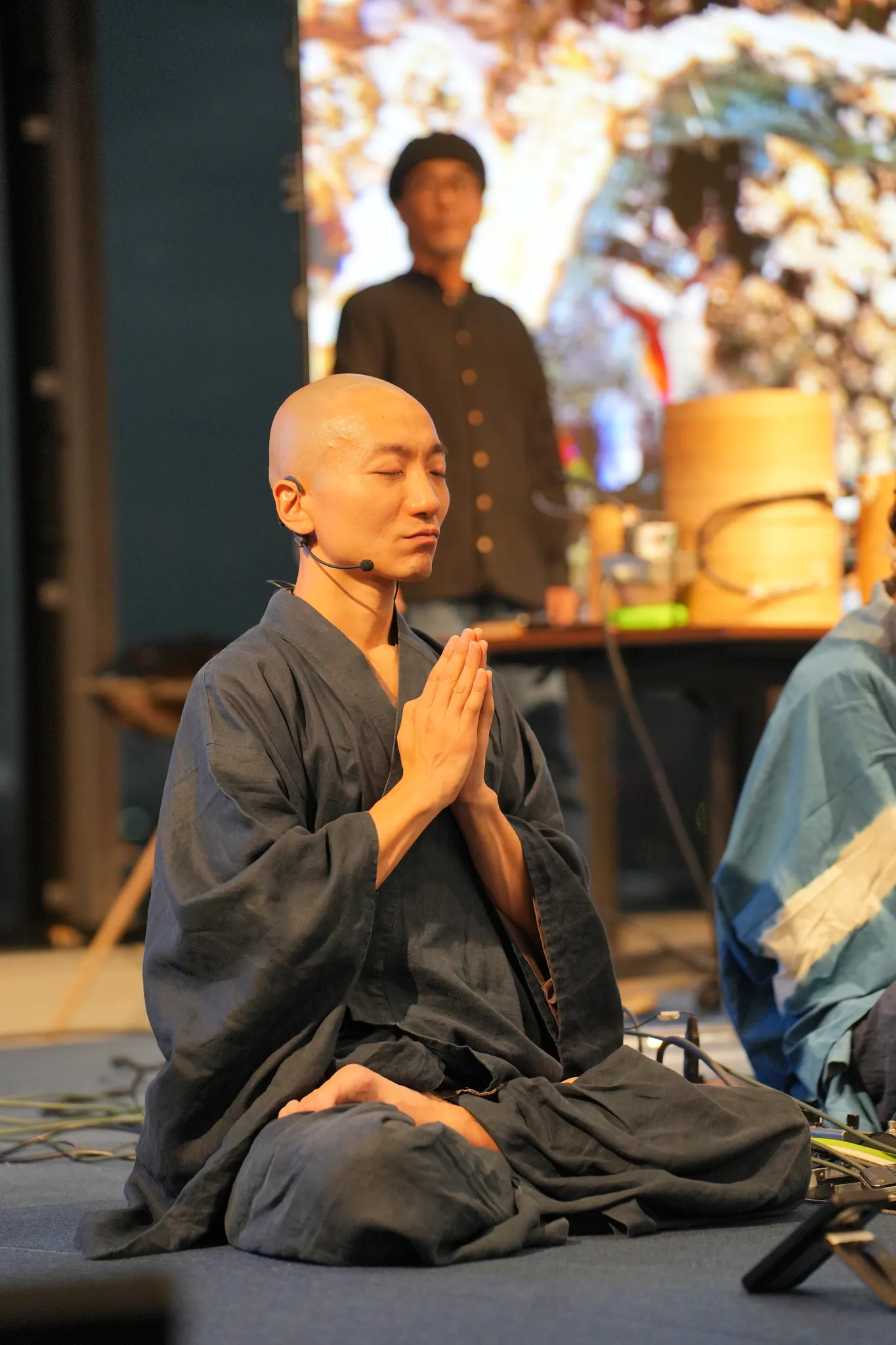
Yogetsu Akasaka at HOLOLIFE Summit 2025 Tokyo
Through the practice of cleaning, you can experience that your inner world and the outer world are connected. When you clean the outside world, you clean your inner world, and vice versa.
— Yogetsu Akasaka, Biohacker Summit 2022
Akasaka's cleaning example is not a claim that chores treat anxiety. The exercise is to notice judgement and resistance, then continue without arguing with every thought. Akasaka said that accepting what arises in one's own mind can help people understand others' reactions and make room for tolerance and compassion.
He also described emotions as experiences that appear and pass; resisting or attaching to them can make them feel more persistent. During stress, it may help to ask, "What am I reacting to, and what is happening in me right now?" The point is to create space to notice a response without blaming oneself. This approach complements loving-kindness: one notices a reaction; the other directs attention towards goodwill. For a comparison with a structured mindfulness course, see Mindful Based Stress Reduction: Practices, Benefits and Limits.
Immersive environments: VR as a tool for guided meditation for stress and anxiety
For some people, sitting still with closed eyes makes meditation harder. At Biohacker Summit Stockholm 2018, Gribbin described VR as a way to create a different visual and sound environment and make meditation feel more immediate.
Virtual reality meditation is immediate and immersive; in just seconds, it provides a profound experience of meditation, no matter where you are and from the very first try.
— Tristan Gribbin, Biohacker Summit 2018
Gribbin presented Flow VR, which used 360-degree nature visuals and music across six modes: Breathe, Focus, Move, Let go, Calm and Restore. Meditation can include movement; someone uncomfortable with quiet sitting may prefer it or a vivid external focus.
He also demonstrated breathing cues paired with an imagined sense of space around the heart, and suggested setting an intention, trusting physical movement and using vocalisation to release stress. These elements describe his approach, rather than a prescription for every user or programme.
The practical test is whether technology helps someone practise. VR may offer a starting point, but a headset is optional, and the talk does not establish that VR reduces anxiety better than non-digital practice. Audio guidance, kind wishes or mindful cleaning may be more convenient or comfortable.
Developing long-term stress resilience
Regularity may matter more than finding a perfect technique. A study of non-experienced meditators found benefits after 13-minute daily sessions for eight weeks. A small pilot study of pre-healthcare students examined five to 12 minutes of guided mindfulness, six days a week for eight weeks. It reported improvements in stress, anxiety and mindfulness, with greater changes in some measures among those who practised more (pilot study of guided mindfulness meditation). These studies tested particular programmes and groups, not a universal minimum duration.
People may value different outcomes: noticing tension earlier, following a guided session or recognising habitual reactions. A useful practice is one that can be repeated and adapted, rather than one that promises a particular feeling each time. For more on meditation and stress management, see Mindfulness Meditation: Moving Beyond Stress Relief to Self-Hacking. Evidence is encouraging but mixed across programmes and outcomes, so it helps to track personal experience without assuming every benefit will follow.
Anyone whose anxiety is persistent, worsening or interfering with daily life should consider support from a qualified health professional. Meditation can complement care for some people, but does not replace appropriate care.
Practical ways to integrate these practices
Choose one practice and keep it small enough to repeat:
- Settle and notice. Sit or stand comfortably. Take a few natural breaths and notice where the body meets the chair or floor; there is no need to force a breathing pattern.
- Add goodwill. Borrowing from Immonen's Biohacker Summit Helsinki 2017 practice, silently wish yourself safety, happiness, health and ease. If comfortable, extend the wishes to someone you care about.
- Notice resistance. If attention wanders or a difficult feeling appears, name it gently. Acknowledge the distraction, then return to the practice.
- Try an everyday task. Drawing on Akasaka's Biohacker Summit Amsterdam 2022 talk, choose a simple task such as tidying or washing up. Notice judgements, then return attention to what the hands are doing.
- Choose a helpful format. Guided audio, a quiet room or the immersive environment Gribbin described at Biohacker Summit Stockholm 2018 may make it easier to begin. The tool is optional; the practice is paying attention.
Keep the approach flexible: some days breathing may be enough; on others, goodwill or walking may feel more workable. A brief note afterwards about what was practised and whether it felt accessible can help identify a routine worth continuing. Find event information for HOLOLIFE Summit 2027 Amsterdam.
FAQ
What is the best meditation for stress and anxiety?
There is no single best practice for everyone. Mindfulness has evidence of benefit for anxiety; loving-kindness practises goodwill, while guided or immersive formats may help some people begin. Choose something manageable enough to repeat.
How can I improve my psychological resilience?
Practise noticing a reaction, acknowledging it without judgement and choosing what to do next. Akasaka's cleaning example offers a way to notice resistance, while Immonen's practice directs attention towards goodwill. Regularity and fit matter more than a particular technique.
Can virtual reality help with meditation?
It may help some people engage with guided practice through immersive visuals and sound, as Gribbin described at Biohacker Summit Stockholm 2018. His talk describes an approach to access, not proof that VR is more effective than other formats. Non-digital practice may suit others just as well.
How long should I meditate to see results for stress?
No duration guarantees results. Trials tested 13 minutes a day for eight weeks and, in a small pilot, five to 12 minutes of guided practice over eight weeks. These are examples, not a universal prescription; start with a manageable routine and assess whether it helps.
Sources
- Meditation programs for psychological stress and well-being: a systematic review and meta-analysis
- Brief, daily meditation enhances attention, memory, mood, and emotional regulation in non-experienced meditators
- Effects of guided mindfulness meditation on anxiety and stress in a pre-healthcare college student population: a pilot study
- Talk: “GUIDED LOVING-KINDNESS MEDITATION”, Inka Immonen, Biohacker Summit 2017 Helsinki
- Talk: “Meditating With Virtual Reality”, Tristan Gribbin, Biohacker Summit 2018 Stockholm
- Talk: “Zen Practice for Hacking the Ego”, Yogetsu Akasaka, Biohacker Summit 2022 Amsterdam. Speaker page
This article is for general information and is not medical advice.
In this story
Comments
Loading comments…