News
Heart Coherence Meditation: A Practical Guide to the Practice
By Teemu Arina ·
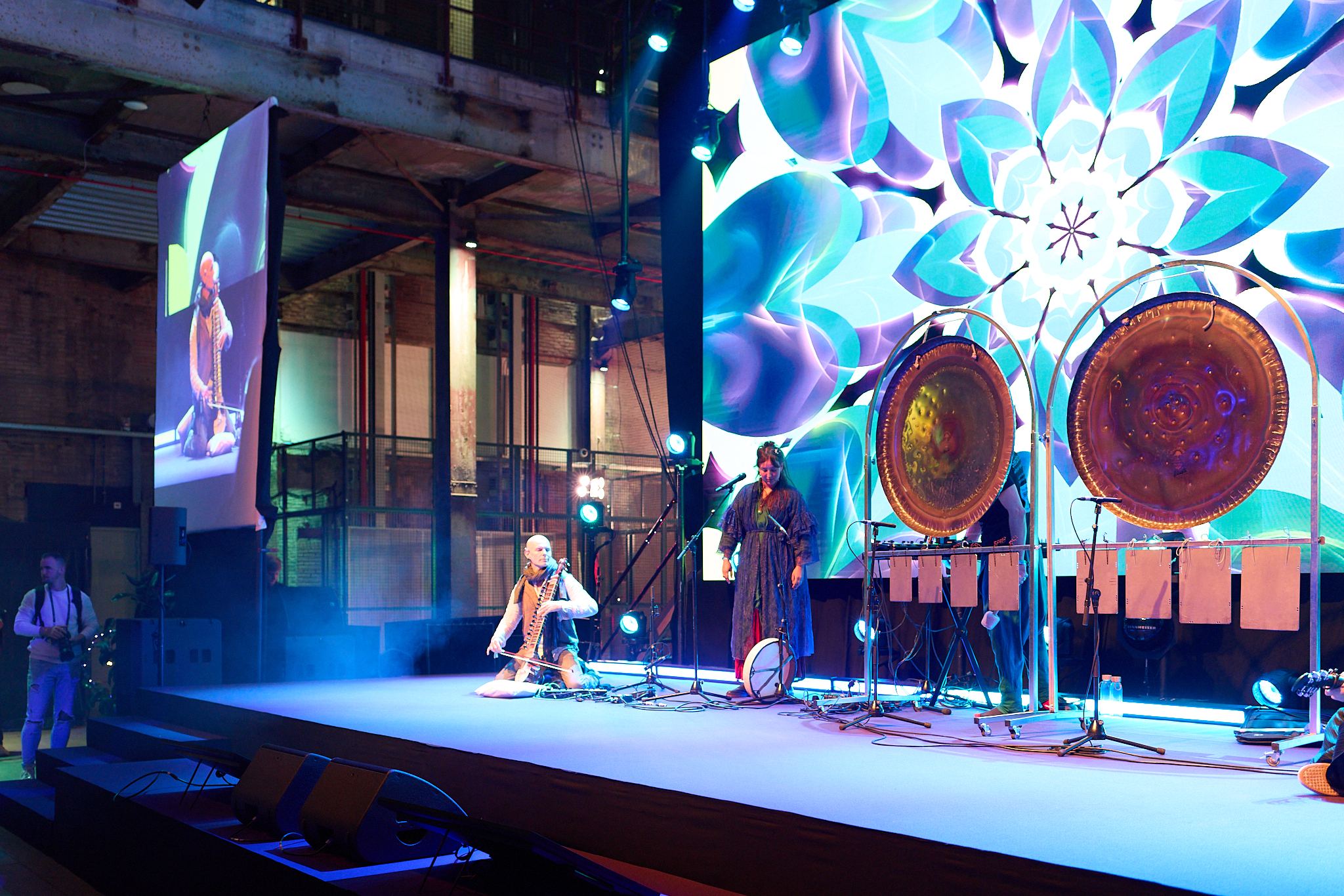
Heart coherence meditation combines steady breathing with focused attention to the heart area and, often, a chosen positive emotion. It can be practised without a device; an HRV monitor may show changes in heartbeat patterns, but it cannot tell someone exactly what they feel.
What heart coherence meditation means
“Heart coherence” is used to describe a more orderly pattern in heart rhythm, often considered alongside breathing, attention and emotional state. A practice may invite someone to breathe smoothly, bring attention to the chest and recall a feeling such as appreciation. These are related parts of an exercise, but they are not interchangeable: feeling calm is a personal experience, while a coherence score is a measure calculated from physiological data.
The term does not mean that the heart and brain become perfectly synchronised, or that a particular emotional state can be read directly from a pulse. In a small study of 14 people, researchers measured EEG and HRV before and during autogenic meditation. Heart coherence scores increased during meditation compared with baseline; the researchers also reported changes in some brainwave measures, while noting that further research was needed to confirm heart coherence as a simple indicator of meditation (study of brain and heart rhythms during autogenic meditation).
That finding offers a useful distinction: meditation can coincide with measurable changes in heart-rhythm patterns, but one small study does not establish a universal signature of calm or prove that every practice produces the same result.
How heart coherence meditation relates to HRV (heart rate variability)
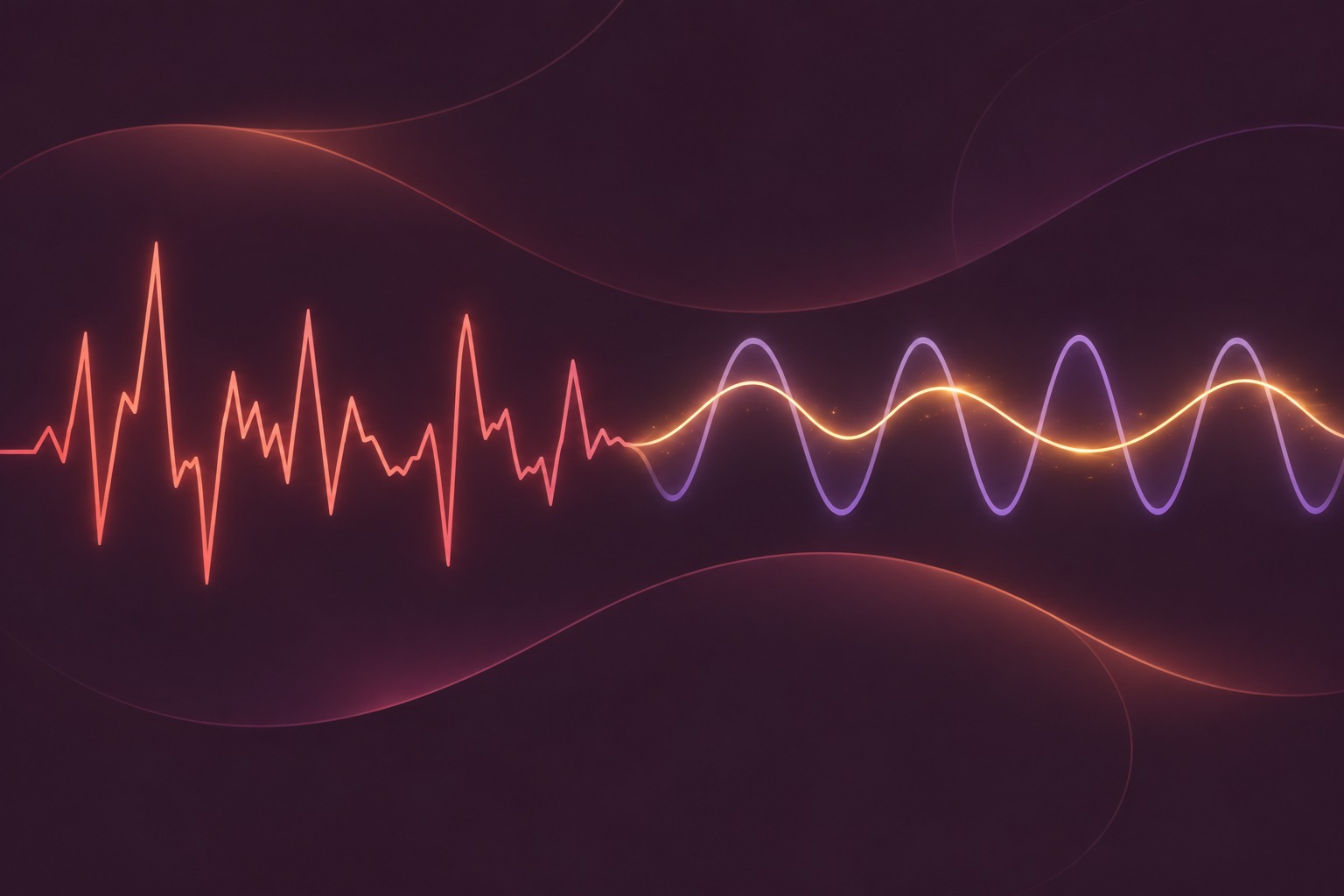
The illustration contrasts irregular heart rhythm with the organized, rhythmic pattern seen during heart coherence.
Heart rate variability, or HRV, describes the variation in timing between successive heartbeats. It is not simply a measure of how fast the heart beats. HRV changes with factors including breathing, activity, sleep and stress, and its interpretation depends on how and when it is measured. For a closer look at what a reading can and cannot tell you, see Heart Rate Variability: What HRV Can—and Can’t—Tell You.
Heart coherence is related to HRV, but the terms do not mean the same thing. HRV is a broad set of measures of beat-to-beat variation; a coherence score usually describes a particular pattern or quality in that variation. So an HRV reading on its own does not establish that someone is in a coherent meditative state.
A 2014 study of autogenic meditation measured both HRV and heart coherence, and found that coherence scores rose during meditation compared with baseline. A later study followed 11 people through eight weeks of mindfulness-based stress reduction. After training, the relationship between some EEG measures and heart coherence during mindful breathing had strengthened, although spectrum analysis alone did not show a difference before and after training (study of neurocardiological interplay after mindfulness meditation). These findings are promising, but they examine specific measures and small groups—not a universal test of meditation quality.
A review of nine workplace mindfulness studies found improvements in autonomic balance assessed using HRV coherence measures, as well as reductions in some cortisol measures. The review concerned mindfulness-based programmes in employee samples, not heart coherence meditation alone, so its findings should not be taken as proof that any one short breathing exercise will produce the same effects (systematic review of workplace mindfulness and physiological stress measures).
A simple practice: settle, breathe and focus
The following routine is a practical way to explore the elements commonly associated with heart coherence meditation. It does not require a monitor or a particular breathing rate.
- Settle. Sit comfortably, with the body supported and the shoulders relaxed. Let the eyes close or rest on one point. Take a moment to notice the contact of the feet with the floor or the chair beneath you.
- Breathe. Allow the breath to become smooth and even, without forcing it to be deeper or slower than is comfortable. Notice the movement of the chest or abdomen. If attention wanders, return to the next breath.
- Focus. Bring attention to the area around the heart. Some people find it helpful to imagine the breath moving through the chest; this is an attention cue, not a claim that air literally passes through the heart.
- Choose an emotional anchor. If it feels natural, recall a person, place or moment that brings appreciation, care or warmth. Stay with the memory lightly rather than trying to manufacture an emotion.
- Close gradually. After a few minutes, let the breath return to its ordinary rhythm. Notice whether anything feels different, without judging the session by how calm you became or by a number on a screen.
Mindful breathing has been examined as part of structured meditation training, but that does not establish one ideal pace or a single best sequence for everyone. If concentrating on the chest or changing the breath feels uncomfortable, return to ordinary breathing and use a neutral anchor, such as the sensation of the feet on the floor. For other ways of working with attention in meditation, see Beyond Breathing: Advanced Meditation for Stress and Anxiety.
Using gratitude and forgiveness in meditation
Gratitude can be a straightforward focus for the emotional part of a session: bring to mind something specific that is appreciated, and notice the response without demanding that it feel intense. This is a personal practice suggestion, not a claim that gratitude automatically changes an HRV score.
Forgiveness is a different, more demanding form of emotional reflection. At Biohacker Summit 2022 Amsterdam, Vishen Lakhiani, speaking about The 6 Phase Meditation Method: How to Create Magic In Your Life, described forgiveness as Phase 3 of the method. He presented it as a way of releasing some of the emotional weight of the past, rather than excusing another person’s behaviour.
Forgiveness does not mean the person is off the hook; it means the baggage is removed from your soul. — Vishen Lakhiani, Biohacker Summit 2022
Lakhiani also described forgiveness as something that can be practised gradually: “Forgiveness is a muscle that you build over time.” His point was to start with situations that feel manageable and work towards more difficult ones, rather than forcing a major emotional reckoning into a brief breathing session. Forgiveness does not require reconciliation or abandoning appropriate boundaries.
This kind of reflection should not be treated as a shortcut to physiological coherence. It may be meaningful as part of a broader meditation, but the research cited here does not test Lakhiani’s forgiveness practice as a way to improve HRV or heart coherence. Someone who finds the exercise distressing can leave it aside and return to a steadier, less emotionally charged focus.
What a heart rate variability monitor can show
A heart rate variability monitor can record heartbeat timing and, depending on the device and software, display HRV measures or a coherence score. During a session, the data may show that the rhythm changed as breathing became more regular. That is useful feedback about the signal the device recorded; it is not a direct measurement of gratitude, peace of mind or the quality of attention.
Results also depend on measurement conditions. Movement, posture, breathing, sensor fit and the device’s method of calculation can affect what appears on screen. A score from one session is best treated as a snapshot, rather than a verdict on the practice or a comparison with someone else’s reading. For background on interpreting trends, see Understanding Your Normal Rate for Heart Rate and HRV.
If a monitor is used, compare like with like: keep the position and timing similar, remain still, and note relevant context such as recent exercise or poor sleep. Look for repeatable patterns over time instead of reacting to a single result. The aim is to use feedback to support attention, not to spend the meditation trying to make a graph look a certain way.
How to make the practice sustainable
Start with a short, manageable session and attach it to a routine already in place—for example, after sitting down to work or before an evening wind-down. A few attentive minutes can be easier to repeat than an ambitious daily target. If the practice becomes a performance task, simplify it: settle, notice the breath, and return to the present when the mind wanders.
Keep the measure of success broad. Some days may feel calm; others may involve distraction or no obvious shift in mood. A monitor may show a change, but a lack of visible change does not prove that the session was pointless. Consistency can help someone learn what they notice during the practice, while the data remains one source of information rather than the whole story.
The evidence available here supports cautious interest in links between meditation, breathing and heart-rhythm measures. It does not establish heart coherence meditation as a treatment for a health condition, nor does it show that a particular device can assess emotional wellbeing. Anyone with concerns about symptoms or health should seek advice from a qualified professional rather than relying on a meditation session or wearable reading.
Readers interested in the wider biohacking community can find details of HOLOLIFE Summit 2027 Amsterdam, scheduled for 13–14 November 2027.
FAQ
What is heart coherence meditation?
Heart coherence meditation is a practice that brings together steady, comfortable breathing and focused attention, often on the heart area. Some people include an emotion such as appreciation. “Coherence” may also refer to a measured pattern in heart rhythm, which is not the same as the subjective experience of feeling calm.
How do you practise heart coherence?
Sit comfortably, let the breath become smooth without forcing it, and bring attention to the chest or another neutral anchor. You can recall something that brings appreciation if that feels comfortable. Finish by letting the breath return to normal and noticing how you feel, rather than trying to achieve a particular score.
What does heart coherence feel like?
People may notice calm, warmth, steadier attention or no clear change at all. Those experiences vary, and none of them confirms a specific physiological coherence score. A monitor and a person’s felt experience provide different kinds of information.
Can a heart rate variability monitor measure heart coherence?
Some devices display a coherence score based on heartbeat patterns, while others report different HRV measures. These readings describe data captured by the device; they cannot directly measure gratitude, forgiveness or a person’s full emotional state. Results are most useful when interpreted in context and compared under similar conditions.
Does heart coherence meditation work?
Small studies have reported changes in heart coherence measures during meditation, and a workplace review found changes in some physiological stress measures after mindfulness programmes. The research involves different practices and populations, so it cannot confirm that every heart coherence session will have the same effect. It is reasonable to treat the practice as a way to explore breathing and attention, not as a guaranteed health outcome.
Sources
- Reorganization of the brain and heart rhythm during autogenic meditation
- Do workplace-based mindfulness meditation programs improve physiological indices of stress? A systematic review and meta-analysis
- Increased neurocardiological interplay after mindfulness meditation: A brain oscillation-based approach
- Talk: “The 6 Phase Meditation Method: How to Create Magic In Your Life”, Vishen Lakhiani, Biohacker Summit 2022 Amsterdam
This article is for general information and is not medical advice.
In this story
Comments
Loading comments…